
Introduction
Your body needs 13 essential vitamins, and they fall into two groups: water soluble and fat soluble. That might sound like textbook trivia, but it changes how you should eat, when you should take supplements, and how much is safe.
In this guide we explain water soluble vs fat soluble vitamins in simple terms, list which is which, answer the common question "is B12 fat soluble?", and show why the difference matters for your health and fitness.
Quick Answer
Water soluble vitamins vs fat soluble vitamins differ in how they dissolve, absorb and store. Water-soluble vitamins (vitamin C and the eight B vitamins) dissolve in water, are not stored in large amounts (except B12), and need regular intake. Fat-soluble vitamins (A, D, E and K) dissolve in fat, need dietary fat to absorb, and are stored in the liver and fat tissue, so too much can build up to harmful levels.
What Are Water-Soluble Vitamins?
Water-soluble vitamins dissolve in water. They are absorbed directly into the blood, and most extra amounts are flushed out in urine. Because the body stores little of them, you need a steady supply from food.
There are nine water-soluble vitamins:
|
Vitamin |
Main role |
Common sources |
|---|---|---|
|
B1 (thiamine) |
Turns food into energy |
Whole grains, pulses, pork |
|
B2 (riboflavin) |
Energy metabolism, skin and eyes |
Milk, curd, eggs, almonds |
|
B3 (niacin) |
Energy, nervous system |
Peanuts, chicken, fish |
|
B5 (pantothenic acid) |
Energy, hormone production |
Most foods |
|
B6 (pyridoxine) |
Protein metabolism, brain |
Bananas, chickpeas, fish |
|
B7 (biotin) |
Fat and carb metabolism, hair and nails |
Eggs, nuts, seeds |
|
B9 (folate) |
Cell growth, important in pregnancy |
Leafy greens, lentils |
|
B12 (cobalamin) |
Red blood cells, nerves |
Meat, fish, eggs, dairy |
|
C (ascorbic acid) |
Immunity, collagen, iron absorption |
Amla, citrus, guava, peppers |
Water-soluble vitamins can be lost in cooking, especially when vegetables are boiled and the water is thrown away. Steaming, quick stir-frying, or reusing cooking water helps keep them.
Which Vitamins Are Not Water Soluble?
The vitamins that are not water soluble are A, D, E and K. These are the fat-soluble vitamins. An easy way to remember them: ADEK.
Fat-soluble vitamins dissolve in fat, not water. They are absorbed along with dietary fat in the intestine, then stored in the liver and fatty tissue for later use, sometimes for months.
|
Vitamin |
Main role |
Common sources |
|---|---|---|
|
A |
Vision, immunity, skin |
Carrots, sweet potato, ghee, eggs, liver |
|
D |
Bone health, calcium absorption, immunity |
Sunlight, fatty fish, egg yolk, fortified milk |
|
E |
Antioxidant, protects cells |
Nuts, seeds, vegetable oils |
|
K |
Blood clotting, bone health |
Leafy greens, broccoli, fermented foods |
Vitamin D deficiency is very common in India despite plenty of sunshine, due to indoor lifestyles, covered skin and pollution.
Water Soluble vs Fat Soluble Vitamins: Comparison Table
Here is fat soluble vs water soluble at a glance:
|
Feature |
Water-soluble vitamins |
Fat-soluble vitamins |
|---|---|---|
|
Vitamins |
B1, B2, B3, B5, B6, B7, B9, B12, C |
A, D, E, K |
|
Dissolves in |
Water |
Fat |
|
Absorption |
Directly into the blood |
With dietary fat, via the lymph system |
|
Storage |
Little storage (except B12 in the liver) |
Stored in liver and fat tissue |
|
Excess |
Mostly passed out in urine |
Builds up in the body |
|
How often needed |
Regularly, ideally daily |
Less often, as stores last longer |
|
Risk of toxicity |
Low (but possible with very high supplement doses) |
Higher with large supplement doses |
|
Effect of cooking |
Easily lost in boiling water and heat |
More stable during cooking |
Is Vitamin B12 Water or Fat Soluble?
Vitamin B12 is water soluble, not fat soluble. It belongs to the B-complex group, which are all water-soluble vitamins.
Why do so many people ask "is B12 fat soluble?" Because B12 behaves unusually. Unlike other water-soluble vitamins, the body stores B12 in the liver, often enough to last several years. That storage makes it seem like a fat-soluble vitamin, but chemically it dissolves in water.
B12 facts worth knowing:
- Found mainly in animal foods: meat, fish, eggs and dairy. Vegetarians and vegans are at higher risk of deficiency, which is common in India.
- Needs a helper to absorb: a stomach protein called intrinsic factor. Older adults and people on certain medicines (like metformin or long-term antacids) may absorb less.
- Deficiency builds slowly: because of liver stores, symptoms like tiredness, tingling in hands and feet, or memory issues may take years to appear.
So, B12 water or fat soluble? Water soluble, with a long-term storage twist.
Water vs Fat Soluble Vitamins: Why the Difference Matters
1. Absorption
Fat-soluble vitamins need fat to be absorbed. A vitamin D tablet taken with black coffee on an empty stomach absorbs poorly; take it with a meal that has some fat, like eggs, nuts, curd or a little ghee. Water-soluble vitamins absorb with or without food.
2. Storage and how often you need them
Because most water-soluble vitamins are not stored, you need them often through a varied diet. Fat-soluble vitamins are stored, so a missed day matters less.
3. Safety and toxicity
This is the most important difference. Excess fat-soluble vitamins, especially A and D, can build up and cause harm when taken in high-dose supplements for long periods. Water-soluble vitamins are generally safer, but mega-doses can still cause problems; for example, very high long-term B6 can damage nerves. More is not always better.
4. Deficiency risks
Water-soluble deficiencies can appear faster with a poor diet (except B12). Fat-soluble deficiencies can develop with very low-fat diets or conditions that affect fat absorption.
Are There Water-Soluble Fats?
No. Fats by nature do not dissolve in water; that is why oil floats on water. If you searched for "water soluble fats," you most likely meant water-soluble vitamins, or wondered why some vitamins need fat to absorb.
The confusion is understandable: fat-soluble vitamins hitch a ride with dietary fat, while water-soluble vitamins do not need fat at all. Some supplements use special formulas (such as emulsified or "water-dispersible" vitamin D or E) to make fat-soluble vitamins mix better in liquids, but the vitamins themselves remain fat soluble.
How to Take Fat and Water Soluble Vitamin Supplements
- Food first. A varied diet with vegetables, fruits, pulses, whole grains, dairy, eggs or meat covers most needs.
- Take fat-soluble supplements with a meal containing some fat for better absorption.
- Water-soluble supplements can be taken with or without food; with food is often gentler on the stomach.
- Do not exceed the label dose, especially for vitamins A and D.
- Get tested before high-dose supplementing. B12 and vitamin D blood tests are simple and common.
- Talk to a doctor if you are pregnant, take medicines such as blood thinners (vitamin K interacts with warfarin), or have a medical condition.
Vitamins for an Active Lifestyle
If you train regularly, vitamins work behind the scenes: B vitamins help turn food into energy, vitamin D supports bones and muscle function, and vitamin C supports collagen and recovery. They do not replace protein, though. Building and repairing muscle still depends on getting enough protein every day.
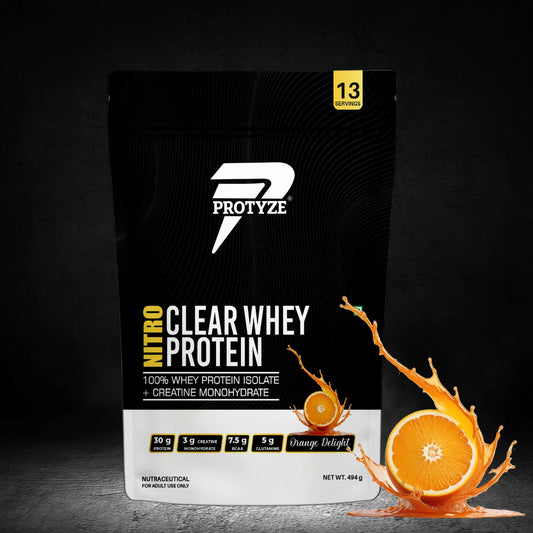
A practical routine: eat a balanced, colorful diet for your vitamins, take any prescribed vitamin D or B12 with a meal, and use a protein shake to fill your daily protein gap. Nitro Clear Whey Protein with Creatine is a light, refreshing way to add 20g protein plus creatine after workouts. Because clear whey is very low in fat, take fat-soluble vitamin supplements with a regular meal rather than with your shake.
Editor: replace bracketed values with label figures. If your product is fortified with vitamins, list them here; if not, keep the wording as is.
Frequently Asked Questions
Is B12 fat soluble?
No, vitamin B12 is water soluble. It is part of the B-complex group. Unlike most water-soluble vitamins, though, B12 is stored in the liver, often for several years, which is why it is sometimes mistaken for a fat-soluble vitamin.
Which vitamins are water or fat soluble?
Water-soluble vitamins are vitamin C and the eight B vitamins (B1, B2, B3, B5, B6, B7, B9 and B12). Fat-soluble vitamins are A, D, E and K. Remember the fat-soluble group with the shortcut ADEK.
Which is more dangerous in excess: water or fat soluble vitamins?
Fat-soluble vitamins carry a higher risk because the body stores them, so high-dose supplements can build up to toxic levels. Water-soluble vitamins are mostly flushed out in urine, though very high doses of some, like B6, can still cause harm.
Should I take vitamin D with food?
Yes. Vitamin D is fat soluble, so it absorbs better with a meal that contains some fat, such as eggs, nuts, curd or food cooked in oil or ghee.
Is vitamin C water or fat soluble?
Vitamin C is water soluble. Your body does not store much of it, so include vitamin C-rich foods like amla, guava, citrus fruits or capsicum every day.
Can I take water and fat soluble vitamins together?
Yes. Most multivitamins contain both. Taking them with a meal helps the fat-soluble ones absorb and reduces stomach upset.
Conclusion
The difference between water soluble vs fat soluble vitamins comes down to how your body absorbs and stores them. Water-soluble vitamins (B complex and C) need steady daily intake, while fat-soluble vitamins (A, D, E and K) need dietary fat to absorb and can build up if you overdo supplements. And yes, B12 is water soluble, just with unusually long storage.
Eat a varied diet, take fat-soluble supplements with meals, test before you supplement high doses, and pair good nutrition with enough daily protein to support an active life.
Disclaimer: this article is for general information and is not medical advice. Consult a doctor or registered dietitian before starting supplements, especially if you are pregnant, take medication, or have a medical condition.